

Every product starts with a molecule someone needs.
Sourcing proteins and small molecules has its problems. Cost is one; batch consistency, supply-chain security and scaling matter too. Precision Germination™, our plant-based production method, addresses all of them.
From gene to molecule

Gene
The instructions for the molecule we design.

Seed
A soybean seed: nature’s bioreactor.

Molecule
A protein or small molecule, made as the seed germinates.
WHY SEEDS

A seed is already a factory.
A soybean spends a season storing protein, oil and nutrients, then mobilizes all of it when it germinates. Germination is our production window: the seed's own metabolism builds the molecule we design.
Soybeans are grown on farmland around the world. Capacity comes from planting acres, not from building expensive bioreactors.
WHO WE ARE
The people building it.

Brian DeDecker, PhD
Chief Executive and co-founder
PhD, structural biology, Yale University
Postdoctoral research, protein engineering, University of Cambridge
Fellow, drug discovery, Harvard
Faculty Emeritus, molecular, cellular and developmental biology, University of Colorado Boulder
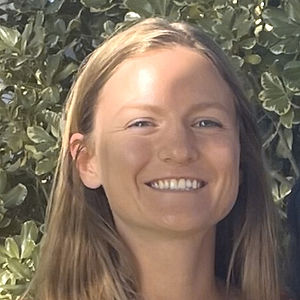
Maya Nelson
Science Lead and co-founder
BA, biochemistry, University of Colorado Boulder
Leads the laboratory program: plant bioengineering

Chuck Lee, PhD
Business Development Lead
PhD, microbiology, University of Oxford
BA, molecular biology, University of Colorado Boulder
Leads our conversations with future commercial partners
Milestones
November 2023
Colorado Advanced Industries Accelerator
Early-Stage Capital and Retention award, State of Colorado
Spring 2025
gener8tor gBETA
Pre-accelerator program, Spring 2025 cohort
2025
USDA Small Business Innovation Research grant
Phase I, National Institute of Food and Agriculture
CONTACT
Tell us what molecule you need.
We would like to hear from you.